
Why do some SLPs criticize ABA?
Because for years, a lot of their criticism was earned. Older ABA drilled speech mechanically, produced kids who answered prompts but couldn’t converse, and sometimes crowded out the speech therapy a child needed.
Here’s what’s actually behind the conflict, straight from the professional sources, and how the two fields work together when it’s done right.
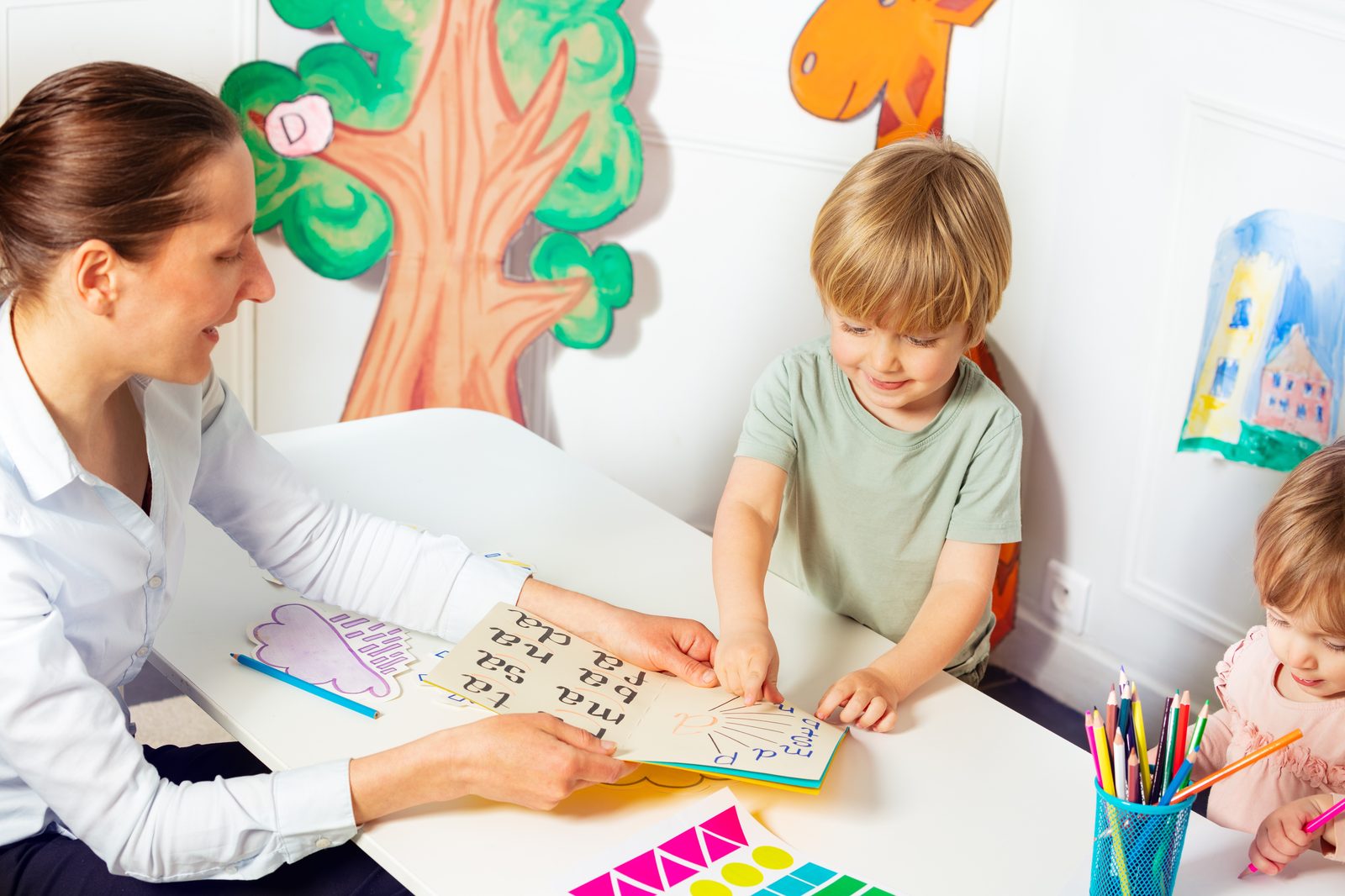
The SLP professional association says traditional ABA must guard against prompt dependency, and calls naturalistic ABA an effective complement to speech therapy.
On this page
What do SLPs actually object to?
You don’t have to guess, because their professional association wrote it down. ASHA’s own guidance says practitioners using traditional ABA “must consider common intervention practices to avoid problems with prompt dependency and generalization,” and states plainly that ABA’s use “is not without controversy.”
Translated: a child can learn to say “ball” on command a hundred times and still never ask for a ball at the park. SLPs see that pattern and blame the drilling that produced it.
Where are the critics right?
On the history, mostly. Old ABA treated speech as a behavior to shape through repetition, while speech pathology treated it as language development happening inside relationships. Those are genuinely different views, and the SLP view explains things the drill-based view missed, like why echoed phrases carry meaning.
They also have a point about tools. Research on picture-exchange systems shows solid communication gains but small effects on speech itself, which is exactly the kind of nuance SLPs bring to a team that might otherwise oversell one method.
Is some of it a turf problem?
Yes, and it runs both directions. ASHA’s advocacy page states that ABA providers “sometimes act as ‘gatekeepers’” who recommend only ABA and block access to comprehensive assessment. That happens, and it’s indefensible.
Behavior analysts have published the mirror-image critique of themselves, with papers acknowledging the field’s reputation for resisting collaboration. Reddit amplifies the loudest versions of both camps, which is why the conflict looks nastier online than it plays out in most real teams.
How do the two fields work together now?
ASHA itself says ABA-based methods used in natural contexts “may … be effective complements” to speech therapy, and pushes for SLPs to sit in every comprehensive autism assessment. That’s the model that works: the SLP owns the architecture of language, the BCBA owns motivation, practice, and carryover into daily routines.
It’s also how Budding Futures ABA operates. We don’t employ SLPs, so we have no incentive to replace yours; we coordinate with them, share goals, and use tools like functional communication training to make their targets work at home. Clinical Director Rachel Blackburn, BCBA will tell you plainly what belongs to speech therapy and what belongs to us, and our ABA vs speech therapy guide draws that line in detail.
Frequently asked questions from parents
Q: Do SLPs hate ABA?
A: Some do, and the loudest voices cluster online. The professional position is more measured: ASHA flags real problems with traditional ABA while calling naturalistic ABA an effective complement to speech services.
Q: Can my child do speech therapy and ABA at the same time?
A: Yes, and for many kids it’s the best setup. It works when the two providers share goals and talk to each other, so ask both teams how they coordinate before you start.
Q: Who should lead my child’s communication goals?
A: For speech and language structure, your SLP. For making communication work across the day, motivation, and behavior that blocks it, your BCBA. A good team decides this together at assessment.
Q: Is ABA bad for speech development?
A: The evidence doesn’t support that. Communication-focused ABA teaches functional asking, and research on alternative communication tools shows they don’t suppress speech. The valid criticism targets old-style drilling, not modern practice.
ABA therapy support near you
In-Home ABA Therapy Across Colorado
How Budding Futures delivers BCBA-led, communication-first ABA at home.
ABA Therapy in Colorado Springs
In-home, BCBA-led ABA for Colorado Springs families.
ABA Therapy in Lakewood
In-home ABA therapy for families across Lakewood.
Sources
ASHA National Joint Committee
Applied behavior analysis and communication services.
ASHA state advocacy
Applied behavior analysis: ASHA’s advocacy positions.
Donaldson & Stahmer, 2014
Team collaboration: the use of behavior principles for serving students with ASD, LSHSS.
Flippin, Reszka & Watson, 2010
PECS effectiveness on communication and speech: a meta-analysis, AJSLP.
Want ABA that works with your SLP, not against them?
Tell us who’s on your child’s team. We’ll explain how our BCBAs coordinate goals with speech therapists, and how coverage works in Colorado.