What is generalization in ABA therapy?
Generalization is whether a skill your child learns in therapy actually shows up at home, at school, and out in the community.
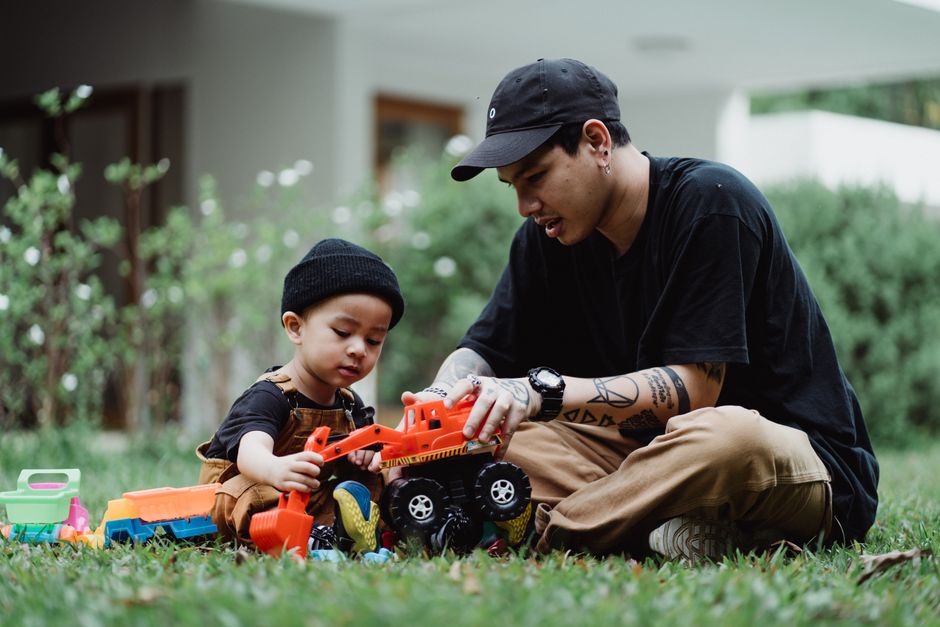
A skill only matters when it works outside the session, with other people and in other places.
Generalization is whether a skill learned in therapy shows up everywhere else — at home, at school, and in the community. A skill that only works in the therapy room is not really a functional skill yet. Good ABA plans for this on purpose, because generalization does not happen by accident; it has to be built into how a skill is taught (Stokes and Baer, 1977). At Budding Futures, we teach in your home from the start, so the skill is practiced where your child actually needs it.
If your child can do something with their therapist but not with you, that is normal, and it is our job to fix. Our BCBAs, led by Rachel Blackburn, BCBA, program generalization into the plan and coach you so the skill carries into your daily routines. Because our therapy happens in your Colorado home, the people, rooms, and materials are already the real ones.
On this page
- Why does my child do something in therapy but not at home?
- What are the three types of generalization in ABA?
- What's the difference between generalization and maintenance?
- Why did my child's skill seem to disappear?
- How is generalization actually taught?
- How does in-home ABA help skills transfer to real life?
- How can you help at home, without turning life into therapy?
- How do your ABA team and school work together on skills?
- Common questions about FBAs
Why does my child do something in therapy but not at home?
Usually because the skill got tied to one setup: one room, one person, one set of materials. In ABA that is called narrow stimulus control. Your child learned “I do this here, with this person.” It is not regression, and it is not your fault. It means the skill has not generalized yet.
The fix is simple to say and takes practice to do: use the skill in more places, with more people, on purpose.
What are the three types of generalization in ABA?
- Stimulus generalization — the same skill works with a new person, place, or object.
- Response generalization — your child finds different ways to reach the same goal, like asking for a break with words one time and a card the next.
- Maintenance — the skill keeps working weeks and months later.
The most common worry is the first one. Here is what it looks like in real life:
| Type | What it means | Example at home |
|---|---|---|
| Across people | Works with anyone, not just the therapist | Your child asks you for a break the same way they ask their RBT |
| Across settings | Works in any room or place | Follows the wash-hands routine in both bathrooms, not just one |
| Across materials | Works with different objects | Zips a jacket, a backpack, and a lunch bag, not only the practice zipper |
What's the difference between generalization and maintenance?
Generalization is across space, people, and things. Maintenance is across time. A skill has truly stuck when it works in new places and still works weeks later. We plan and check for both.
Why did my child's skill seem to disappear?
A skill fading is scary to watch, but it usually is not relapse. Most often it is a maintenance signal: the skill needs a little re-practice in real settings. Skills that are not used tend to fade, the same way they do for anyone. We build in check-ins so a skill gets refreshed before it slips far.
How is generalization actually taught?
It is planned, not luck. The tools are straightforward:
- Teach in the natural environment, during real play and routines.
- Practice with several people and in several places, not just one.
- Use natural cues, the ones your child will actually meet day to day.
- Fade prompts so your child does not wait to be told.
- Let natural rewards take over from planned ones.
Teaching in natural, changing settings has been shown to improve how skills carry over (Schreibman et al., 2015). Much of this lives in natural environment teaching and the other ABA teaching techniques we use.
How does in-home ABA help skills transfer to real life?
In-home therapy starts in the place the skill has to work. The cues, the rooms, and the people are already real. That is a real head start for generalization. It does not make skills transfer automatically, the team still has to program it, but it removes the gap between “the clinic” and “real life” because there is no clinic in between. See our in-home ABA service.
How can you help at home, without turning life into therapy?
You do not need to run drills. A couple of real moments a day does more than an hour of forced practice. A few easy ones:
- Let your child ask you for a snack the way they ask their therapist.
- Use the same wash-hands or get-dressed steps the team uses, in your own bathroom.
- Give the skill a real reason to show up, then step back and let it happen.
How do your ABA team and school work together on skills?
A skill carries over faster when everyone uses the same cues and language. With your consent, we line up targets with your child’s teachers so home, therapy, and school point the same way. More on school collaboration and how ABA coordinates with speech, OT, and school.
Common questions about FBAs
How long does it take for a skill to generalize?
It varies by child and skill. Some carry over quickly; others need weeks of practice across people and places. The data tells us when it is solid.
What are examples of generalization in everyday life?
Your child asks you for a break the same way they ask their therapist, or washes hands in any bathroom, not just the practice one.
Does ABA teach skills that work in real life?
That is the whole point of generalization. A skill that only works in session is not finished yet, so we keep going until it works where your child lives.
Is regression the same as failure?
No. A skill fading usually means it needs a little re-practice in real settings, not that progress was lost.
Sources
Stokes & Baer (1977), Journal of Applied Behavior Analysis
Seminal paper showing generalization must be planned into how a skill is taught, not assumed.
Schreibman et al. (2015), Journal of Autism and Developmental Disorders
Research on naturalistic teaching, which improves how learned skills carry over to real settings.
Baer, Wolf & Risley (1968), Journal of Applied Behavior Analysis
The paper that defined ABA's seven dimensions, including that behavior must be observable and measurable, and must generalize.
CDC — Autism Data & Research
Federal data on how common autism is and how it is identified in children.
Clinically reviewed by the Budding Futures clinical team under Rachel Blackburn, BCBA. This page is general education, not medical advice. Your child’s BCBA plans generalization for your child specifically.
Want skills that work at home, not just in therapy?
Our Colorado BCBAs teach in your home and program skills to carry into real life. We verify your Medicaid or insurance first.