
How to discipline an autistic child for hitting
When your child hits, punishment is not the first move. The first move is to keep everyone safe and understand what the hitting is trying to say.
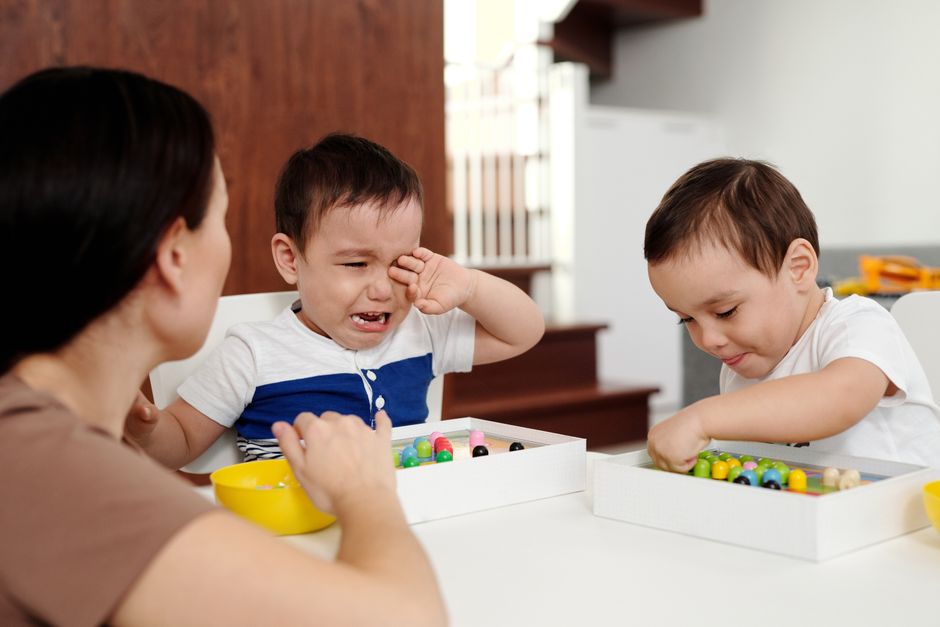
Most hitting does one of four jobs. Find the job, then teach a faster way to do it.
Do not discipline hitting the way you would punish a typical tantrum. For an autistic child, hitting is almost always communication, not defiance. In a study of 1,380 autistic children, 68% had been aggressive toward a caregiver and 49% toward others, so this is common, not a sign of bad parenting. The fix is to stay calm, keep everyone safe, find the reason behind the hit, then teach a faster way to meet that need. At Budding Futures ABA, our BCBAs find the cause and build an assent-based applied behavior analysis (ABA) plan for the aggressive behavior, not a punishment program.
On this page
Why kids hit, and what helps
Most hitting does one of four jobs. Difficulty communicating is a major driver: about 25 to 30% of autistic children are minimally verbal, and roughly 74% have sensory differences that can tip into sensory overload. Many resort to hitting out of frustration when they cannot express a need. Once you know the job, the response gets clearer:
| Reason behind the hit | What it can look like | What helps instead |
|---|---|---|
| Escape (the task is too hard) | Hits when asked to stop a favorite activity | Lower the demand, offer a break card |
| Attention | Hits when you are on the phone or with a sibling | Give attention during calm moments |
| Access (wants something) | Hits when told no or to wait | Teach asking plus short, coached waiting |
| Sensory or pain | Hits when overloaded, tired, or unwell | Lower noise and lights, check for illness |
What should you do the moment your child hits?
Stay calm, block the hit, move to safety, take a few deep breaths, and skip the big reaction, which can accidentally reward it. Why stay so calm? A strong reaction can unintentionally reinforce hitting and add to the overload. Redirect to a calm activity and reconnect once everyone is safe.
How do you stop the hitting for good?
Teach a replacement that works faster than hitting, like a break card or the words “I need a break,” and reward it every time at first. This is functional communication training, which a 2025 meta-analysis found had a very large effect on reducing challenging behavior (Tau-BC 0.97) while building communication. Visual supports, social stories, and praise help the new skill stick, and a written behavior intervention plan keeps everyone consistent. How long until it works? Often weeks, when the replacement is rewarded consistently.
Should you punish an autistic child for hitting?
Rarely helps. The American Academy of Pediatrics warns that harsh discipline and spanking actually increase aggression over time; in one analysis, 3-year-olds spanked often were more aggressive by age 5. Replacing the behavior beats punishing it.
How do you build positive behavior instead of hitting?
Reward what you want to see. Catch your child with autism being calm and give immediate praise, so positive behavior gets more attention than aggressive behavior ever does. Visual schedules and clear routines lower the frustration that leads to an outburst. Does this really work? Yes. Applied behavior analysis teaches an appropriate behavior to replace hitting, and consistent reinforcement makes it stick. A board-certified behavior analyst can help your child with autism spectrum disorder learn calmer ways to cope.
When should you get help?
If hitting is frequent, hurts someone, is getting worse, or your child is hurting themselves, do not wait; a BCBA can run a functional behavior assessment safely and target the aggressive behavior with applied behavior analysis. Budding Futures provides in-home ABA for aggression and maps your Medicaid or insurance coverage across Colorado.
Sources
Kanne & Mazurek (2011), J Autism Dev Disord
1,380 children: 68% aggressive toward caregivers, 49% toward others.
Functional Communication Training meta-analysis (NCBI, 2025)
FCT's very large effect (Tau-BC 0.97) on reducing challenging behavior.
American Academy of Pediatrics (Pediatrics, 2018)
Harsh discipline and spanking increase aggression over time.
Kirby et al. (Autism Research, 2022)
About 74% of autistic children have sensory differences that can trigger overload.
Talk it through with a Colorado BCBA
We can look at what is really going on, build a calm plan with you, and check your Medicaid or insurance coverage.