
Discrete Trial Training (DTT) in ABA Therapy
Discrete trial training teaches a skill by breaking it into small steps and practicing one step at a time. Each short practice is a trial: a clear cue, your child's response, and a quick reward.
At Budding Futures, our Colorado BCBAs run DTT the modern way. It stays short, playful, and built around your child, not the stiff drilling many parents remember from older ABA.
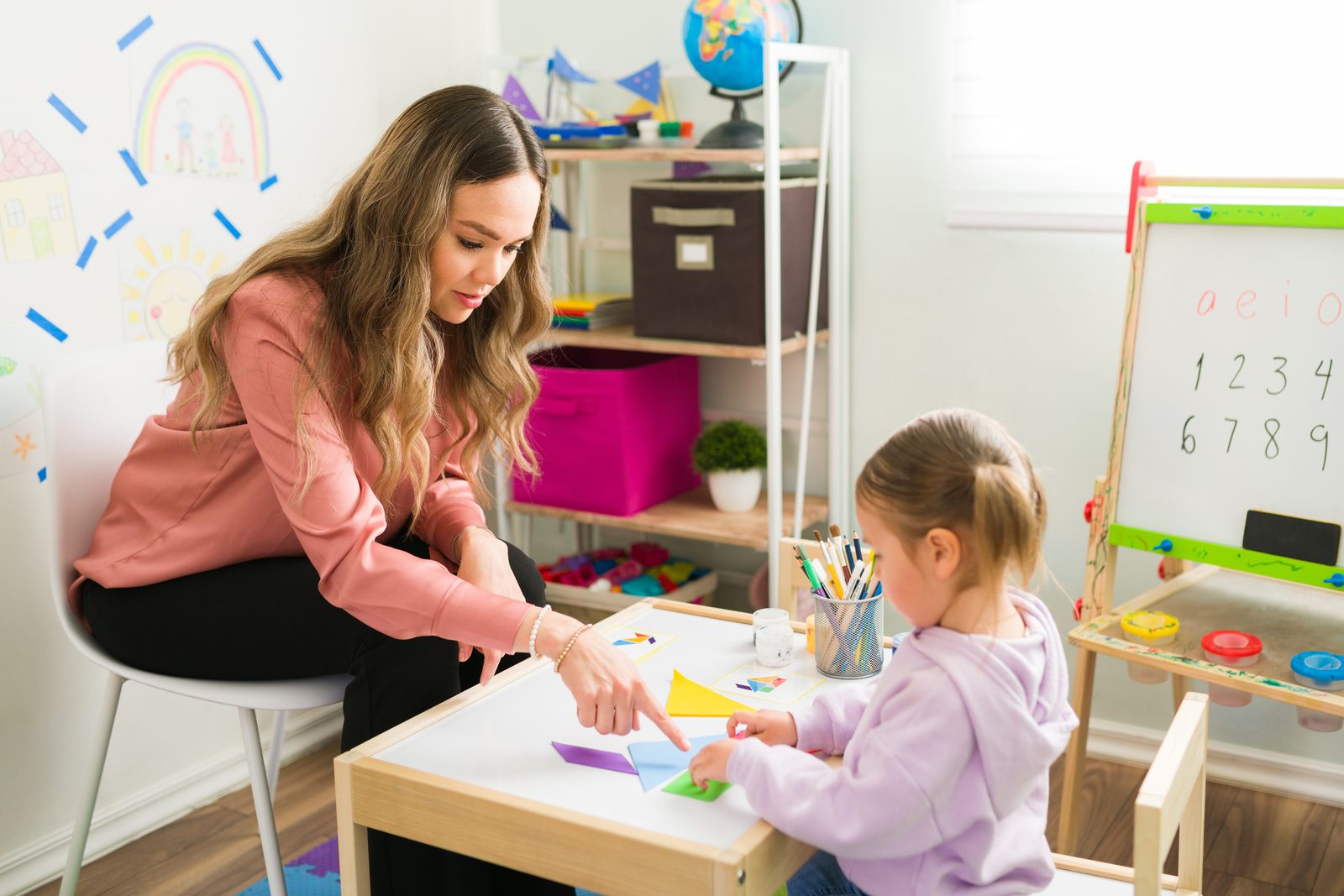
Good DTT today is short, rewarded, and broken up with play, not hours of repetition.
What discrete trial training looks like in a Budding Futures session
When our BCBAs use DTT, and when they don't
How one discrete trial works
A trial has three parts, and it is over in seconds. First comes the cue, called the antecedent. Your therapist might hold up a cup and say, "What is it?"
Then comes your child's response, the behavior. If your child says or signs "cup," that is the response we want. If they need help, the therapist gives a prompt, like quietly mouthing the word, then fades that prompt on later trials.
Last comes the consequence, a quick reward your child enjoys. That might be a tickle, a favorite toy, or praise. The reward makes the skill more likely next time. After a short pause, the next trial begins.
Repeat a target a few times and a child starts to learn it. The skill is then practiced in different rooms and with different people so it does not stay stuck to the table. That last step, generalization, is where a lot of older ABA fell short and where our plans put real focus.
DTT vs natural environment teaching
Most good plans use both. Discrete trial training builds the skill. Natural environment teaching helps your child actually use it. Here is how they compare.
| What to look at | Discrete trial training (DTT) | Natural environment teaching (NET) |
|---|---|---|
| Best for | New, hard-to-learn skills that need clear repetition | Using skills in real life, motivation, social back-and-forth |
| Where it happens | A table or calm spot, in short blocks | During play, snack, getting dressed, daily routines |
| How it feels | Structured: cue, response, reward | Child-led: we follow your child's interest |
| Who leads | The therapist sets the target | Your child's choices guide the moment |
| Example | Learning to point to "cup" when asked | Asking for the cup when your child is thirsty |
| How we track it | Data on each trial, reviewed weekly by a BCBA | Notes on real requests and skills used at home |
Is DTT just robotic drilling?
This is the worry we hear most, and it is fair. Early ABA from decades ago leaned on long tables of repetition and sometimes punishment. Videos from that era look cold, and no parent wants that for their child.
Good DTT today is different. The trials are short, the rewards are things your child actually likes, and we stop when your child is done. We watch for engagement, not just correct answers.
At Budding Futures you can sit in on any session. If a block does not sit right, you can pause it and talk with your BCBA. We also explain this honestly on our pros and cons of ABA and is ABA harmful pages.
How Budding Futures uses DTT at home in Colorado
We bring DTT into your home, not a clinic. A Registered Behavior Technician runs the trials during a regular session, and Rachel Blackburn, BCBA, our Clinical Director, builds and reviews the plan. Every RBT finishes 40 hours of training and a competency check before working with your child.
Because we are in your living room, the skills connect to your child's real world fast. A word practiced in a trial gets used at the snack table that same hour. Parent coaching is built in, so you can run a few trials yourself between visits.
Discrete trial training is well studied. In a 2020 review, the National Clearinghouse on Autism Evidence and Practice examined decades of research and named 28 evidence-based practices for autistic children. Discrete trial training is one of them, alongside naturalistic intervention and functional communication training.
Source: National Clearinghouse on Autism Evidence and Practice (Steinbrenner et al., 2020), ncaep.fpg.unc.edu. See also our autism and ABA research hub.
Questions parents ask about DTT
What is a discrete trial in ABA?
Is discrete trial training the same as ABA therapy?
Is DTT harmful or robotic?
How is DTT different from natural environment teaching?
What skills does DTT teach best?
Does Budding Futures use DTT in the home?
Related ABA teaching methods
Natural environment teaching
Teaching during play and daily routines so skills carry into real life.
Functional communication training
Replacing tough behaviors with a clear way to ask for what your child needs.
ABA therapy for children
The honest parent guide to what good ABA looks like for your child.
Want to see what good ABA looks like for your child?
We can talk through your child's goals, which teaching methods fit, and what an in-home ABA week might look like in Colorado. No pressure, just a real conversation.