Signs of autism in toddlers (ages 1-3)
The toddler years are when most parents first notice signs. Here is what to look for between ages 1 and 3, and what to do about it in Colorado.
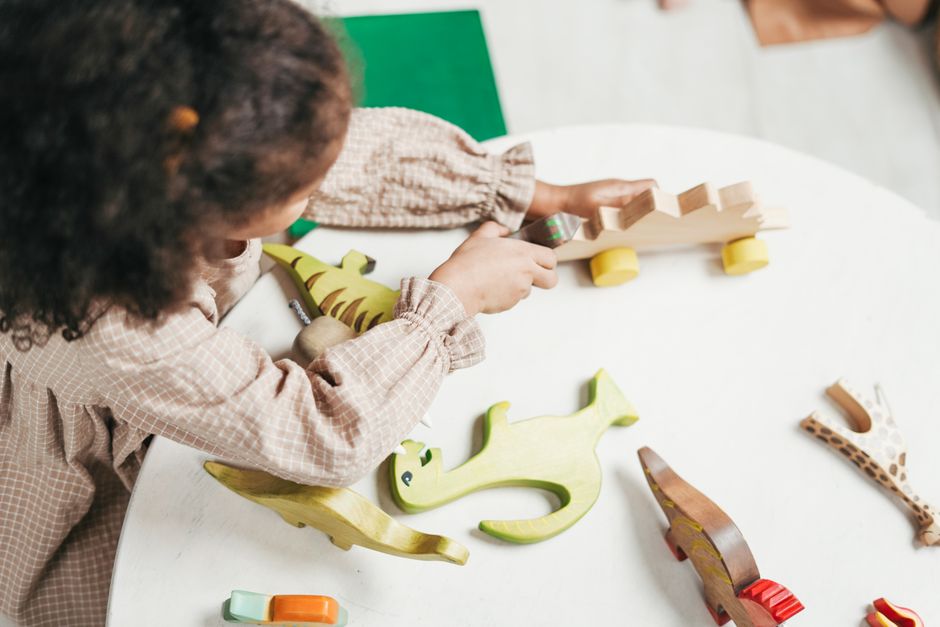
The CDC says autism can be detected by 18 months and reliably diagnosed by age 2. It now identifies about 1 in 31 children with autism, up from 1 in 150 in 2000.
The main signs of autism in toddlers are not pointing, not responding to their name, little eye contact, delayed speech, and repetitive play like lining up toys. Most parents notice their first sign in the toddler years, and the CDC says autism can be detected by 18 months. A toddler who does not point to show you things by 18 months or lost words they once had should be checked. At Budding Futures ABA, our Colorado BCBAs work with toddlers at home, where real behavior happens.
On this page
- Signs of autism in toddlers by age
- What is the earliest sign of autism in a toddler?
- What are signs of autism in a 2-year-old?
- What are signs of autism in a 3-year-old?
- My toddler is not talking. Is that autism?
- My toddler lost words they used to say. Should I worry?
- What should Colorado parents do next?
- What to do next in Colorado
Signs of autism in toddlers by age
These are the CDC's toddler red flags, tied to the developmental milestones most children reach. The clearest early one is no pointing to share something by 18 months.
| Age | Possible signs of autism |
|---|---|
| By 12 months | No babbling back and forth, no waving or pointing, no pat-a-cake |
| By 15 months | No first words, does not share interest by handing you things or looking where you point |
| By 18 months | Does not point to show you something interesting, little pretend play, limited eye contact |
| By 24 months | No two-word phrases, does not notice when others are upset, prefers to play alone |
| 2-3 years | Does not join other kids in play, lines up toys and melts down at change, repeats words instead of using them, walks on toes |
What is the earliest sign of autism in a toddler?
Not pointing is often the clearest early sign. By 18 months, most toddlers point to show you something they find exciting, not just to ask for it. A toddler who does not point to share, and does not look where you point, is worth a closer look.
“Yes, you should be concerned. Get a second opinion.”
A parent on r/toddlers worried their 26-month-old was not really talking. A pediatric behavior analyst replied plainly, and other parents urged the same thing: do not wait and see, and self-refer to free early intervention now.
Reply in r/toddlers, “26-month-old still not talking” thread · read the thread →
What are signs of autism in a 2-year-old?
By age 2, watch for no two-word phrases, not noticing when others are hurt or upset, little pretend play, lining up toys, repeating words instead of answering, and toe walking. A 2-year-old can be reliably evaluated, so this is a good age to ask.
What are signs of autism in a 3-year-old?
By age 3, signs often show up around other children: not joining play, struggling to take turns, big upset over small changes in routine, and intense, narrow interests. Speech may be missing, or present but used in a scripted, repeated way.
My toddler is not talking. Is that autism?
Maybe, maybe not. A late talker who still points, shares, copies you, and plays pretend is different from one who does not connect. Either way, a speech delay is worth acting on. You do not have to figure out which it is before you ask for help.
My toddler lost words they used to say. Should I worry?
Yes, mention it to your doctor soon. About 30% of autistic children lose skills, usually around 20 months, and losing words is one of the most common. This is a reason to ask for an evaluation now, not to wait.
What should Colorado parents do next?
Start a free evaluation. For a toddler under 3, you can refer yourself to Early Intervention Colorado today, with no diagnosis needed. After a diagnosis, Budding Futures offers in-home ABA for toddlers across Colorado with no current waitlist.
What to do next in Colorado
Toddlers under 3 have the simplest path in Colorado. You can refer your own child, for free, without a diagnosis.
| Your child's age | Where to start in Colorado (free) | What happens |
|---|---|---|
| Birth to age 3 | Early Intervention Colorado (call 1-888-777-4041, or refer yourself) | A free evaluation and services, with no cost and no diagnosis needed first. |
| Age 3 and older | Child Find through your local school district | A free evaluation, finished within 60 days of your written okay. |
| Any age | Your pediatrician | An autism screen (M-CHAT-R) at the 18- and 24-month visits, then a referral for a full evaluation. |
| After a diagnosis | In-home ABA with a Colorado BCBA | Budding Futures builds the plan, checks your Medicaid or insurance, and starts with no current waitlist. |
After an autism diagnosis, Budding Futures provides in-home ABA across Colorado, works with Health First Colorado (Medicaid) and major insurers, and starts families with no current waitlist. A Board Certified Behavior Analyst, Rachel Blackburn, reviews each plan.
Sources
Plain-language summaries of autism signs come from these authorities. We link the originals so you can read them yourself.
CDC, Signs and Symptoms of Autism Spectrum Disorder
The federal list of autism signs, tied to specific ages from 9 months on.
CDC, Screening and Diagnosis of ASD
Signs can show by 18 months, and a reliable diagnosis is possible by age 2.
Becerra-Culqui et al. (2018), J Autism Dev Disord
Most parents report their first concern by age 2, years before diagnosis.
Tan et al. (2021), Autism Research
About 30% of autistic children lose skills, on average near 20 months.
Early Intervention Colorado
Free evaluation and services for Colorado children birth to age 3.
Not sure what you are seeing? Talk to a Colorado BCBA
We can talk through the signs, point you to the right free evaluation, and if your child has a diagnosis, build an in-home plan and check your Medicaid or insurance.