In-Home ABA Guide

Best In-Home ABA Therapy in Colorado

Skills learned in a clinic often stay in the clinic. In-home ABA therapy teaches your child where it counts: at the kitchen table, in the backyard, at the grocery store. This guide covers what real in-home programs look like, the research behind them, and how to tell marketing from substance.

Why Does In-Home ABA Therapy Produce Better Results?

In-home ABA therapy produces stronger skill generalization than clinic-based therapy. Budding Futures ABA Therapy delivers services across four settings, including home, school, daycare, and community, because research consistently shows that children learn best in the environments where they need to use those skills. A 2006 study published in the Journal of Applied Behavior Analysis found that children who received naturalistic teaching in home and community settings maintained learned skills at significantly higher rates than children who learned the same skills in a single clinical setting.

The reason is straightforward. A therapy clinic is a controlled environment. The lighting stays the same, the materials are always in the same bin, the distractions are managed by staff. When your child learns to request a snack in that room, the skill is tied to that room's specific cues. Move the request to a noisy kitchen with siblings running around, and the skill often doesn't transfer. Behavior analysts call this the problem of stimulus control. The behavior becomes linked to the therapy setting rather than to the natural conditions where it matters.

In-home ABA therapy solves this by teaching in the actual environment. Your child practices requesting food in your kitchen, with your dishes, your fridge, your family's routine. The skill becomes tied to the real cues that will trigger it every day. This is the core principle behind naturalistic teaching, and it is one of the most replicated findings in Applied Behavior Analysis research.

Colorado families face a unique challenge here. The state ranks 48th nationally in board-certified behavior analysts per capita, which means many families are limited to whichever provider has availability. Some of those providers only offer clinic-based services. If you have the option to choose, understanding why setting matters will help you make a better decision. Our complete guide to choosing an ABA provider in Colorado covers the other criteria that matter alongside therapy setting.

What Does an In-Home ABA Session Actually Look Like?

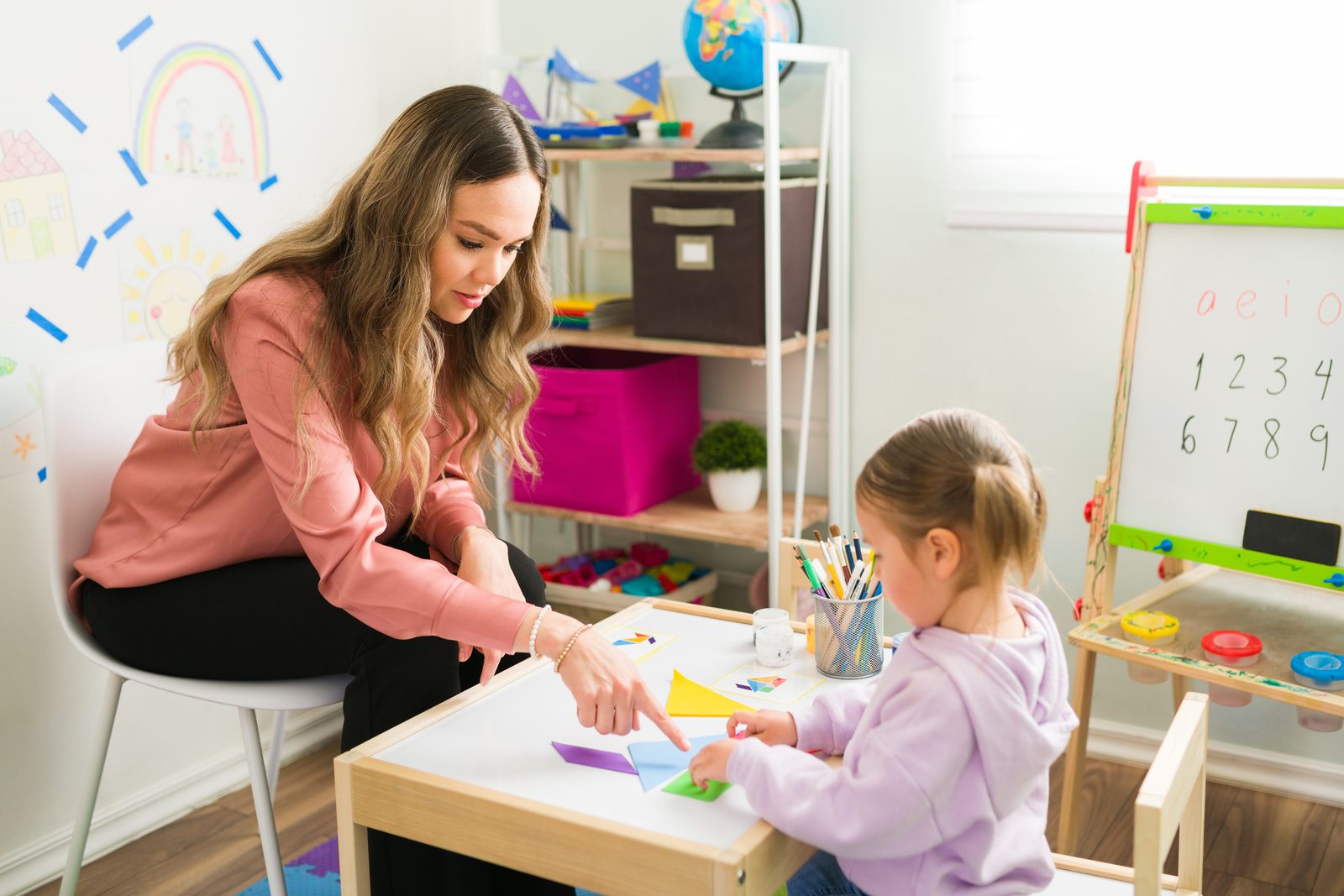
Many parents picture a therapist sitting at the kitchen table with flashcards. That is not what quality in-home ABA therapy looks like. A well-designed in-home program moves through your entire home and out into the community, using everyday routines as teaching opportunities.

The Kitchen

Morning routines are full of natural teaching opportunities. Your child's Registered Behavior Technician (RBT) might work on requesting breakfast items by name, following multi-step directions to prepare a simple snack, or tolerating new foods at the table. The RBT uses the actual items in your kitchen. There is no pretend play kitchen. There is your kitchen, your cereal boxes, your plates. When your child learns to say "more milk" while sitting in their usual chair, that skill sticks because the environment is already the one where they will need it every morning.

The Bedroom

Bedtime routines, getting dressed, and organizing belongings are common targets for in-home sessions. A BCBA from Budding Futures might design a program where the RBT teaches your child to follow a visual schedule for getting dressed independently. The child practices with their own clothes, in their own room, with their own dresser drawers. Daily living skills taught this way transfer at rates that clinic-based programs struggle to match. The initial evaluation identifies which of these daily routines are the highest priority for your family.

The Backyard and Community

Social skills and safety behaviors need to be taught where they actually apply. An RBT might work on turn-taking during backyard play, responding to a parent's call from across the yard, or practicing appropriate greetings when a neighbor walks by. Community outings to the grocery store, library, or park give your child practice navigating real social situations with real people, not role-plays with a therapist. These sessions are where parent training becomes especially valuable, because you learn to reinforce these skills during every outing, not just the ones with a therapist present.

At Budding Futures, our 4-phase methodology moves from assessment through treatment planning before in-home sessions begin. Rachel Blackburn, BCBA and Clinical Director, designs each child's treatment plan around specific environments. If your child's biggest challenges happen at the dinner table and during transitions at school, that is where the therapy happens. We deliver ABA therapy across home, school, daycare, and community settings because targeting multiple environments is what the research says works.

What Does the Research Say About Naturalistic Teaching?

Naturalistic teaching is not a buzzword. It is a set of evidence-based procedures within Applied Behavior Analysis that embed learning opportunities into a child's ongoing activities and interests. The Behavior Analyst Certification Board (BACB) includes naturalistic teaching strategies in the current task list that every BCBA must demonstrate competency in before certification.

A 2015 meta-analysis published in Research in Autism Spectrum Disorders reviewed 29 studies on naturalistic developmental behavioral interventions and found statistically significant improvements across communication, social engagement, and cognitive development. The strongest effects appeared when interventions were delivered in the child's natural environment by both trained therapists and coached parents. That last point matters. When parents are trained to use the same naturalistic strategies between sessions, the child receives consistent teaching across their entire day, not just during therapy hours.

Incidental teaching, one of the most studied naturalistic approaches, was originally developed in the 1960s and has been replicated in dozens of peer-reviewed studies since. The procedure works by following the child's lead, waiting for the child to initiate, and then using that natural motivation to teach a more complex response. A child reaching for a toy becomes an opportunity to teach requesting. A child looking at a dog on a walk becomes an opportunity to build vocabulary. These interactions happen naturally in a home and community setting. They are nearly impossible to replicate in a clinic.

The distinction between environments matters for another reason that parents sometimes overlook. Children with autism spectrum disorder (ASD) often struggle with generalization more than neurotypical peers. A 2019 study in the Journal of Autism and Developmental Disorders found that children with ASD required an average of 2.4 times more generalization training than typically developing children to use a learned skill in a new setting. Teaching in a single setting and then hoping the skill transfers puts these children at a measurable disadvantage. In-home and community-based ABA therapy reduces the generalization gap by teaching in the settings where the skills are needed from the start.

How Does In-Home ABA Work in Denver?

Denver families have more ABA providers to choose from than almost anywhere else in Colorado, but availability does not guarantee quality in-home programming. Many Denver ABA providers operate primarily out of clinic locations and offer "in-home" as a secondary option with limited scheduling. The difference matters. A provider whose infrastructure is built around clinic operations will treat home visits as an add-on. A provider built around in-home delivery, like Budding Futures, designs every treatment plan with the home environment as the primary therapy setting.

Denver's neighborhoods present unique opportunities for community-based ABA. Families near Washington Park, City Park, or the Cherry Creek trail system have natural settings for social skills training, safety awareness, and community navigation. An RBT can practice crossing streets, ordering food at a counter, or greeting other children at a playground. These are skills that cannot be taught in a therapy room, and they are skills that Denver families consistently identify as priorities during our initial evaluations.

What About Aurora, Lakewood, and the Denver Metro?

Aurora is one of the most diverse cities in Colorado, and that diversity shows up in the homes where therapy happens. Families come from different cultural backgrounds, speak different languages, and have different routines. A quality in-home ABA program adapts to these realities rather than forcing a family into a standardized model. When an RBT works in your home, the therapy naturally incorporates your family's mealtimes, your communication patterns, and your daily schedule. This cultural responsiveness is not something clinic-based programs can easily replicate.

Lakewood families often mention outdoor access as a priority. With proximity to Bear Creek Lake Park and the foothills, there are natural opportunities for community-based sessions that build motor skills, safety awareness, and social interaction in outdoor settings. Budding Futures' RBTs work in these community environments as part of the treatment plan, not as occasional field trips.

Across the Denver metro area, families also benefit from school collaboration. When your BCBA can observe your child at home and coordinate with their school team, the treatment plan bridges both environments. This is especially important for children who behave differently at home than at school, which is common. Skills taught in one setting need active programming to transfer to the other.

Is Quality In-Home ABA Available in Colorado Springs and Fort Collins?

Colorado Springs has fewer ABA providers per capita than the Denver metro area, which makes it harder for families to find in-home options. Some families drive 30 minutes or more each way to reach a clinic, which means lost time, disrupted nap schedules, and stress that undermines the therapy itself. In-home ABA eliminates the commute entirely. The therapist comes to you, and therapy happens during your child's best hours, in their most comfortable environment.

Budding Futures serves Colorado Springs families with the same in-home model we use in Denver. Your BCBA designs the treatment plan around your home, and your RBT delivers sessions in the kitchen, bedroom, backyard, and community. The only difference is geography. The clinical quality, BCBA supervision, and assessment process are identical.

Fort Collins presents similar access challenges. As a college town with a growing population, demand for ABA therapy has increased while the supply of certified providers has not kept pace. Families in Fort Collins who want in-home ABA often find that the few available providers have waitlists of six months or longer. Budding Futures is actively expanding in-home services in the Fort Collins area. If you are on a waitlist elsewhere, contact us to check current availability.

How Can You Tell If a Provider's In-Home Program Is Real or Just Marketing?

Some ABA providers in Colorado advertise "in-home therapy" but deliver something closer to clinic therapy that happens to take place in your living room. The difference is significant, and it directly affects your child's outcomes. Here is how to evaluate whether a provider's in-home program is substantive.

First, ask whether the BCBA conducts the initial assessment in your home. A provider who assesses your child in a clinic and then sends an RBT to your house is designing a treatment plan without observing the environment where therapy will happen. At Budding Futures, our BCBAs assess across the settings where your child spends time, using validated tools like the VB-MAPP and ABLLS-R. The initial evaluation covers 2 to 4 sessions specifically so we can observe your child in natural conditions.

Second, ask whether sessions move through multiple rooms and settings or stay in one spot. If every session happens at the kitchen table with the same set of materials, that is tabletop therapy in a home location. It is not in-home ABA therapy as the research defines it. Quality in-home programming rotates through the kitchen, bedroom, bathroom, backyard, and community based on your child's treatment goals. The environments change because the teaching targets change.

Third, ask how the BCBA supervises in-home sessions. The BACB requires a minimum of 5% of treatment hours to include direct BCBA supervision. For in-home programs, that supervision needs to happen in the home, not through video review from an office. Your BCBA should periodically observe sessions, model techniques for the RBT, and adjust programming based on what they see in the actual environment. At Budding Futures, our BCBA supervision model exceeds national benchmarks because Rachel Blackburn maintains lower caseloads that allow for more direct observation time.

Finally, ask about parent training. A real in-home program trains parents to reinforce skills between sessions. If the provider sends an RBT to your house but never teaches you what to do when the RBT leaves, the program is incomplete. A 2015 Lancet study found that parent-mediated intervention produced improvements in autism symptoms that persisted six years after treatment ended. Parent involvement is not optional in quality ABA. It is the mechanism that makes gains durable.

How Does Insurance Cover In-Home ABA in Colorado?

In-home ABA therapy is covered by the same insurance plans that cover clinic-based ABA. There is no separate authorization or different billing code for the location of service. Health First Colorado, the state's Medicaid program, covers ABA therapy for children under 21 with an ASD diagnosis, including in-home delivery. Private insurers mandated to cover ABA under Colorado law include UnitedHealthcare, Anthem Blue Cross Blue Shield, Aetna, Cigna, and TRICARE.

The authorization process requires a Prior Authorization Request (PAR) that documents medical necessity. Your BCBA submits the assessment results, proposed treatment hours (typically 10 to 40 hours per week), and treatment goals. The PAR is approved for six-month periods and must be renewed. Some families worry that requesting in-home delivery will complicate the authorization. It does not. The clinical justification is the same regardless of setting, and many insurers actually prefer in-home delivery because it reduces facility overhead costs.

Budding Futures handles all insurance verification, prior authorization, and re-authorization so therapy starts and continues without gaps. We accept Colorado Medicaid, UnitedHealthcare, Anthem BCBS, Aetna, Cigna, and TRICARE. If you are unsure about your child's coverage, our team checks your benefits during the free consultation call.

What Age Should a Child Start In-Home ABA Therapy?

Earlier is better, and in-home delivery is especially important for younger children. Toddlers between ages 2 and 5 benefit the most from early intensive behavioral intervention, and research shows the strongest outcomes when therapy happens in the child's natural environment. Young children do not yet have the cognitive flexibility to transfer skills from a clinic to home. Teaching in the home from the start eliminates that barrier entirely.

For older children and teenagers, in-home ABA shifts focus toward independence, daily living skills, and community navigation. A teenager working on laundry, cooking a simple meal, or managing a morning routine needs to practice those skills in the actual environment where they will use them. Clinic-based programs for teenagers often rely on simulated environments, which are better than nothing but not as effective as real-world practice.

Budding Futures serves children from toddlers through teenagers. The treatment plan, session structure, and target skills change with developmental stage, but the principle stays the same: teach where the skills are needed. Rachel Blackburn designs age-appropriate programming using VB-MAPP and ABLLS-R assessment data, with therapy hours ranging from 10 to 40 per week depending on your child's needs and insurance authorization.

What Makes Budding Futures' In-Home Program Different?

Budding Futures ABA Therapy was built around in-home delivery from the beginning. We did not start as a clinic and then add home visits. Our entire operational model, from hiring to scheduling to supervision, is designed for therapists who work in families' homes, schools, daycares, and communities. That distinction shapes everything about how we deliver care.

Our Clinical Director, Rachel Blackburn, BCBA, oversees every treatment plan. She maintains lower caseloads than industry averages so that every child receives meaningful BCBA oversight, not just the BACB minimum of 5% supervision. Your BCBA reviews session data weekly, observes in-home sessions regularly, and adjusts programming based on what is actually happening in your child's environment.

Our RBTs are trained specifically for in-home delivery. Working in a family's home requires a different skill set than working in a clinic. RBTs need to navigate family dynamics, adapt to changing environments, manage distractions that do not exist in a controlled setting, and build rapport with siblings and parents. We hire for these qualities and train for them systematically.

We serve families across Colorado, including Denver, Aurora, Lakewood, Colorado Springs, and Fort Collins. If you are looking for in-home ABA therapy and want to understand exactly what our program looks like for your family, the first step is a free consultation. We check your insurance, answer your questions, and connect you with a BCBA who will get to know your child. Call (720) 613-8837 or email info@buddingfuturesaba.com.

ABA therapy session with child
Where Therapy Happens Matters

Skills stick when they are learned where they are needed

Your kitchen. Your backyard. Your child's classroom. That is where real progress happens.

Service Areas

In-Home ABA Therapy Across Colorado

Budding Futures provides in-home ABA therapy across Colorado. Find your city below.

Ready to Get Started?

Take the first step toward your child's growth

We know figuring out ABA therapy can feel overwhelming, especially on top of everything else you're already carrying. One call is all it takes. We'll check your coverage, answer your questions, and connect you with a BCBA who's right for your family.

(720) 613-8837 info@buddingfuturesaba.com
Serving all of Colorado
Send Us a Message
We respond within 1 business day.