Early intervention strategies at home for autism
Parents often search this before they have a full therapy schedule. Breakfast, bedtime, car rides, daycare, and siblings still happen today. Start with one routine, then ask whether early intervention ABA therapy should be evaluated.
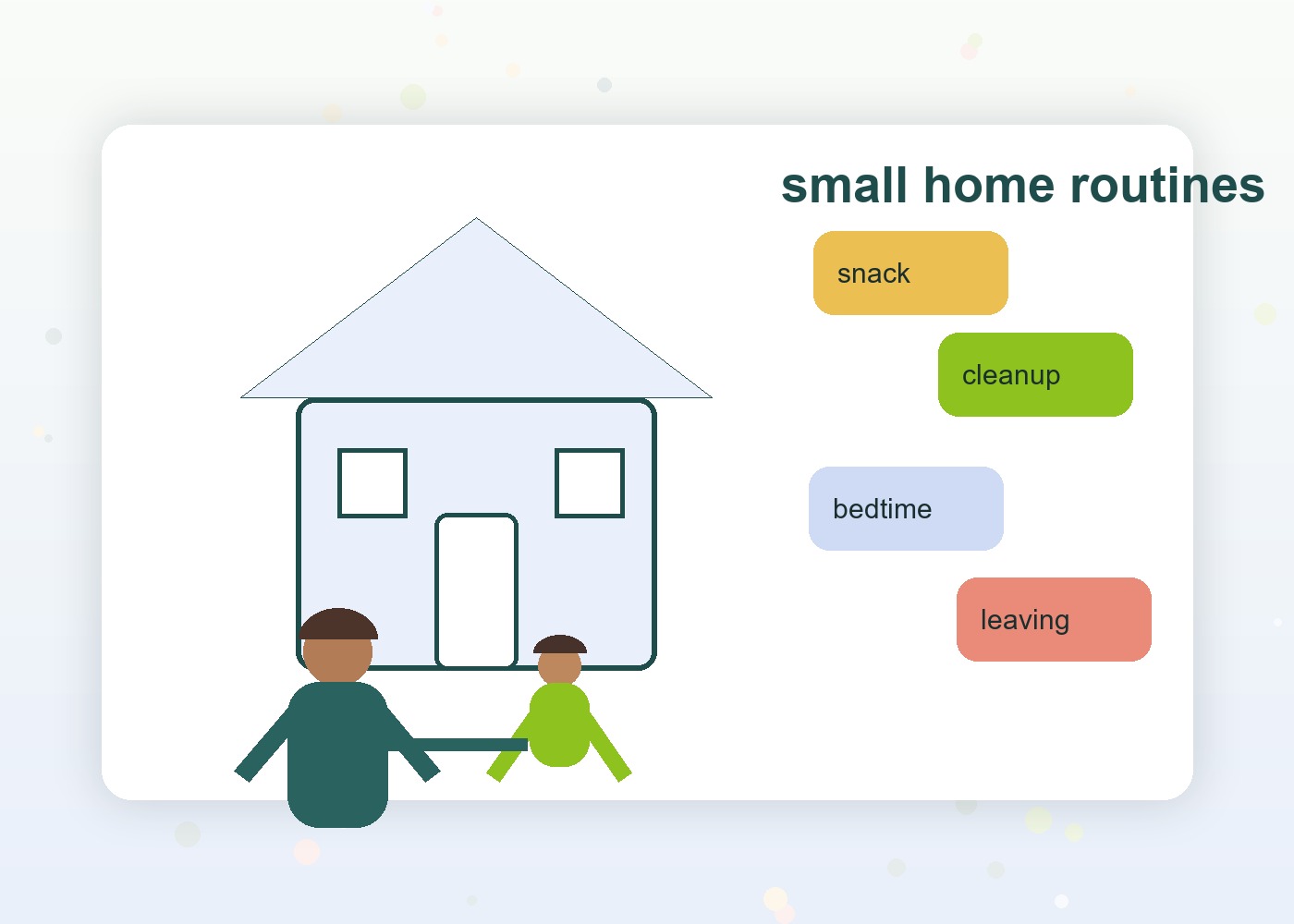
Breakfast, cleanup, bath time, and leaving the house can become small practice moments.
Start with one routine, not a whole new parenting system
A good home strategy should be small enough to use when your child is tired and you are busy. Choose one routine first: leaving the house, asking for a snack, cleaning up toys, sitting for a meal, getting dressed, or going to bed. Then make the cue simple and keep the expectation visible.
Give a useful way to request
Offer a word, sign, picture, gesture, or device button before the frustration peaks. Reward the attempt, not only perfect speech.
Show what comes next
Use a short countdown, first-then language, or a visual cue. Keep the wording familiar so the routine gets easier to recognize.
Copy, then add one step
Join what your child is already doing. Copy the action, then add one small variation instead of forcing a new activity too fast.
What parents can try while they wait for evaluation
Pick the routine that is already giving you the most trouble. If transitions are the hard part, practice one easy transition when nobody is rushed. If asking is the hard part, offer two choices and accept pointing, reaching, a picture, or a sound. If safety is the issue, shrink the risk first, then ask for clinical help.
This is not meant to make parents act like therapists all day. It is a way to make breakfast, cleanup, bath time, and leaving the house a little more predictable while the bigger care question gets sorted.
Important: home strategies are not a substitute for care when safety, communication, aggression, or daily living needs are intense. They are a bridge to a better plan.
How this connects to ABA
ABA looks at what happens before and after behavior, then teaches skills the child can actually use. In-home care lets the BCBA and RBT see the real routine instead of relying only on a parent's memory of it. Rachel Blackburn, BCBA, and the Budding Futures clinical team can build goals around communication, play, safety, daily living, and parent coaching when care is clinically appropriate.
Need help turning home routines into a plan?
Budding Futures can look at the routines that are hardest right now and help you decide whether in-home early ABA is a fit.